Blown-In Insulation for Side-Split Attics
Yes, blown-in insulation works in a side-split, as long as we seal, baffle and fill each roof section to depth as its own attic.
Side-split attics can take blown-in insulation well when each roof section is treated as a separate attic. A side-split has two or three roof sections at different heights, so there can be more than one attic up there, and one of them may have a small hatch or no hatch at all. We do blown-in insulation in these houses one section at a time. First we seal the ceiling, then we set baffles at the eaves, and last we blow insulation in to full depth.
More than one roof, more than one attic
On a side-split, each roof section can be its own attic, with its own ceiling joists, top plates and eaves. Good side-split attic insulation starts there. The roof over the upper bedrooms sits higher than the roof over the living room and kitchen, and the space under one may be closed off from the space under the other.
The eaves matter most. Baffles go in wherever the roof deck comes down to an exterior wall, and a house with several roof sections has eaves along several walls of several attics. Bury the soffit vents in one section and that section loses its airflow, even if the others are fine.
Some side-splits are framed so two sections share one open space. Others have a wall between them. The only way to know is to look in from each hatch.
Getting into each section
Find every attic hatch before anyone writes an estimate. In a side-split the access can be in a bedroom closet, a hallway ceiling, the garage or a storage space beside the upper level. One section may not have a hatch at all.
You can find every section yourself with a flashlight and a tape measure:
- Stand in the yard and count the separate rooflines. Each one is probably its own attic.
- Check the closet ceilings, the hall ceiling and the garage ceiling for a hatch panel, or a square someone has painted over.
- Look for a small door in a wall on the upper level. On some houses it opens onto the attic over the lower section.
- From each hatch, shine the flashlight across the joists and see whether you can look into the next section.
- Hold the tape against a joist in each section, measure the insulation that's there now, and write the reading down for that section.
When a section has no hatch
If a section has no hatch, the estimate should say how it will be reached: a new hatch cut into a ceiling, or an opening from the attic next door. Don't accept a plan that blows one section and guesses at the rest. Our crew looks into every section before we price the job.
If we find vermiculite
If our crew finds vermiculite in any section, we stop and leave it alone. We recommend having it tested by a qualified lab or abatement firm before the job goes any further in that attic.
Where the sections meet
The wall between a higher and a lower section often faces an attic on one side, and when it does, it needs sealing and insulating the way a knee wall does. Inside the house it's a finished wall in a bedroom or stairwell. From the lower attic you may see bare drywall backing, or studs with batts that have slumped away.
Warm air leaks through that wall into the lower attic and then out under the roof. First we seal the gaps along the bottom of the wall and around the wiring holes. Then we cover the attic side so the insulation stays tight against it. If the upper section has sloped ceilings instead of a flat attic, the method changes, and our page on cathedral ceilings and knee walls covers where spray foam fits.
If you can get into the lower attic, check it yourself. Look at the wall rising above the lower ceiling. Bare backing or loose, hanging batts mean that wall is losing heat.
Backsplits and split-levels
Back split attic insulation and split level attic insulation work the same way as a side-split, just laid out differently. On a backsplit the roof height changes from front to back instead of side to side. You still get separate sections, separate eaves and a wall where they meet.
Most of the homes in Bayview Village were built between 1954 and 1964, and split-levels are part of that mix. On a split-level in Bayview Village we do what we'd do on a side-split: find every section, then treat each one as its own attic.
The layout decides where the hatches are. It doesn't change the order inside each section. Seal the ceiling, set the baffles, then blow.
Each section to depth
Every section gets depth rulers, baffles at every eave, and a hatch that's dammed and weatherstripped. Before blowing, our crew staples depth rulers to the joists across each section, so afterwards you can read the depth from the hatch with a flashlight.
The baffles sit between the rafters at each eave. They hold the insulation back from the soffit vents so air keeps moving under the roof deck. Without them, blown insulation can pack into the eaves, block the vents and leave moisture sitting against the roof deck.
At each hatch we build a dam around the opening so insulation doesn't spill out when you lift the panel, and we weatherstrip the lid so it closes tight. A side-split with several hatches gets that on every one.
A house with one roof over one attic is a simpler job, and our page on blown-in insulation in a post-war bungalow attic walks through it. If the old insulation in any section is wet or chewed up by rodents, it comes out before anything new goes in. That's our attic insulation removal work.
Related questions
One roof section at a time, each one handled in full: seal the ceiling, install baffles at the eaves, then blow insulation in to full depth. Where a higher section meets a lower one, we seal and insulate that wall like a knee wall. Before we leave, every hatch is dammed and weatherstripped.
Yes, if the section can be reached some other way, like a new hatch cut into a ceiling or an opening from the attic beside it. The written estimate should say which method that section gets. We don't blow insulation into a section we can't see into and seal first.
It's more work, because a side-split has more than one attic, more eaves, and a wall between sections that needs sealing. Inside each section the method is the same as in a bungalow attic. The extra time goes into reaching every section and handling the walls where they meet.
Services
How we can help in North York
Blown-In Insulation
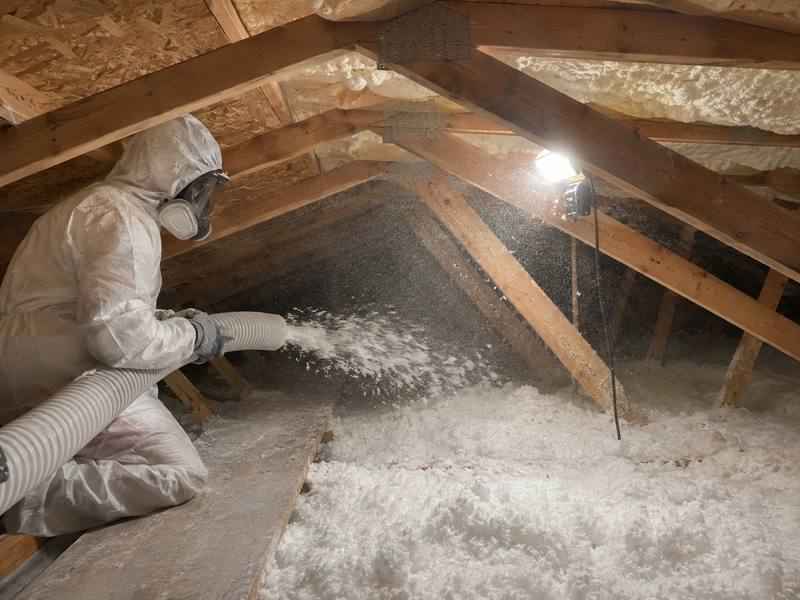
Loose fibreglass or cellulose, blown across your attic floor once the ceiling is sealed and the eaves have baffles.
Learn more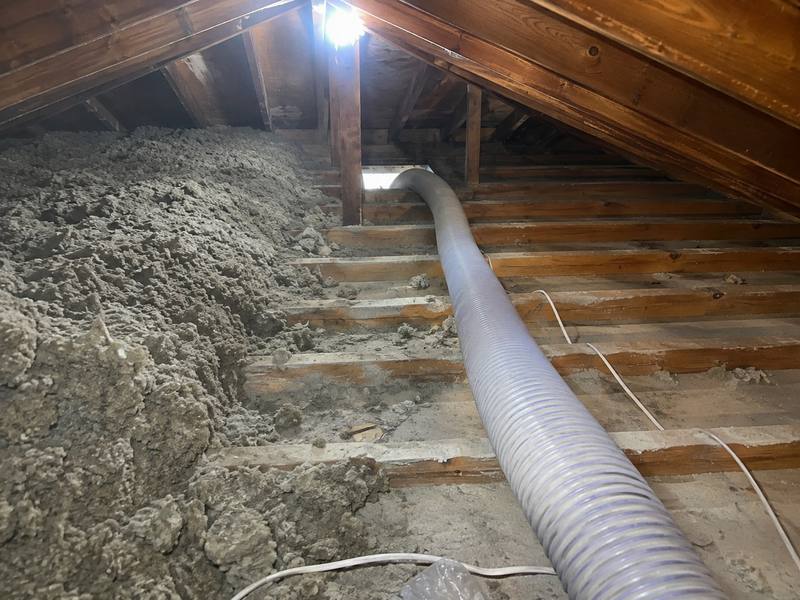
Attic Insulation Removal
We vacuum out old insulation that is wet or damaged by rodents, seal the bare ceiling, then blow new insulation in to full depth.
Learn more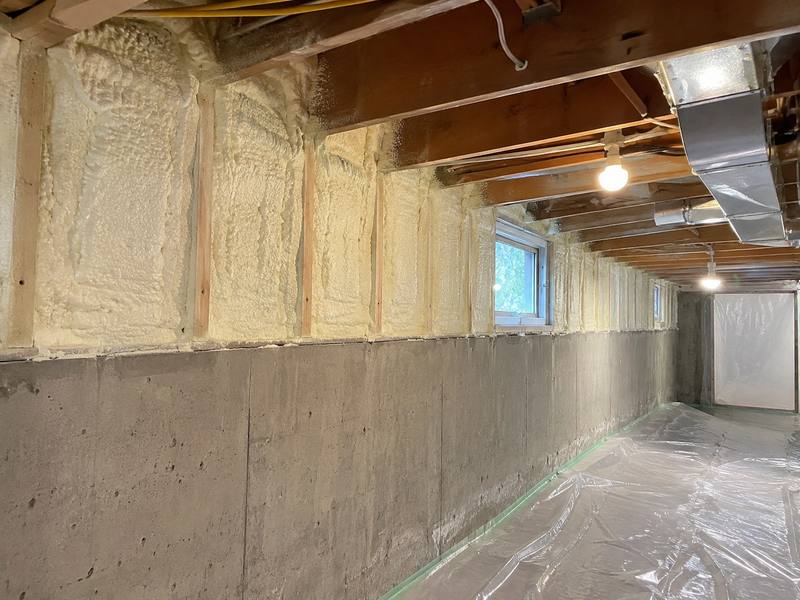
Spray Foam Attic Insulation
Foam for sloped ceilings, knee walls and rim joists. Blown-in wherever an open attic floor will take it.
Learn more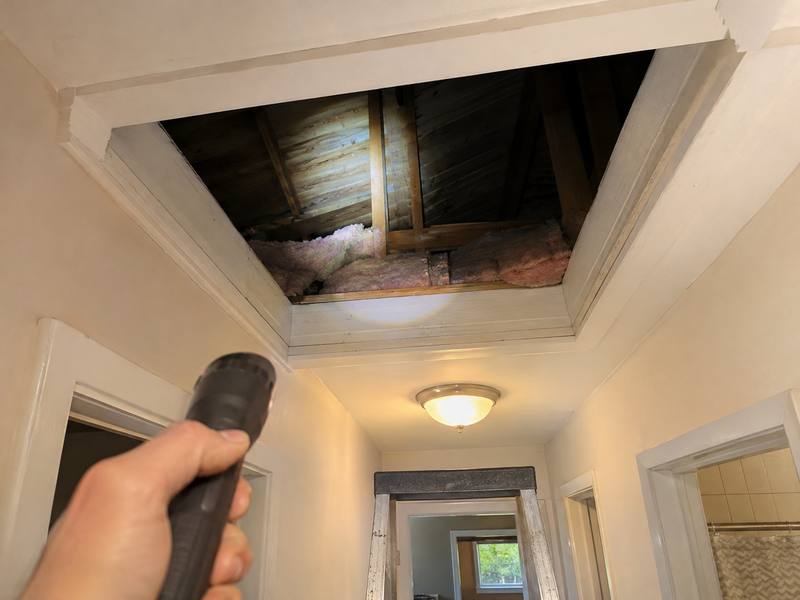
Attic Insulation Rebates & Cost
How the Home Renovation Savings rebate works for an attic job, and what sets the price of the work.
Learn more
Get a quote
Book an attic insulation inspection in North York
Call (437) 525-3774 or send the form. We'll look in your attic, tell you what it needs and give you a written estimate.