Blown-In Attic Insulation in Lawrence Park, ON
Attic insulation for Lawrence Park's English Cottage, Tudor Revival, Georgian and Colonial houses.
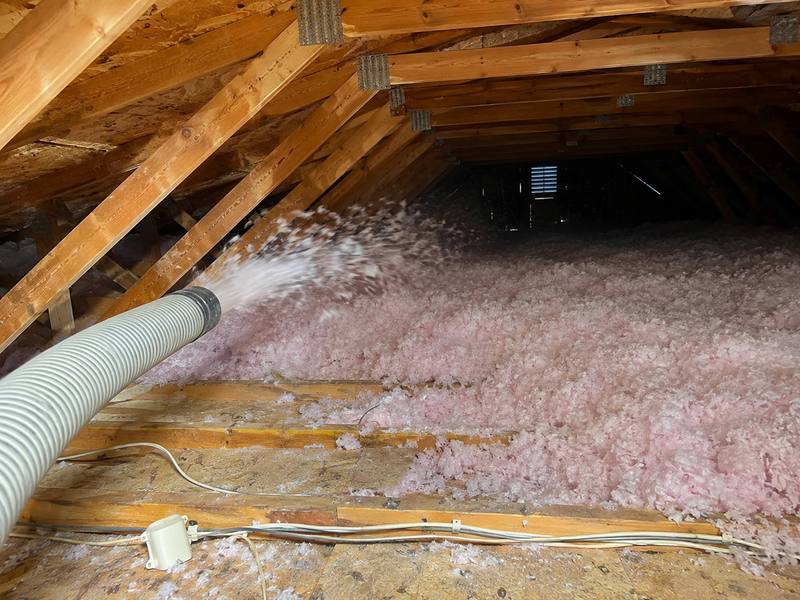
Our crew installs blown-in attic insulation in Lawrence Park, in the M4N postal area, about 5 km from us.
Built between the wars, finished in the 1950s
Most Lawrence Park houses went up between 1910 and the late 1940s, in English Cottage, Tudor Revival, Georgian and Colonial styles. Building stopped and started. Two world wars, a recession and a depression all got in the way, and the neighbourhood wasn't finished until the 1950s.
Two houses side by side on a Lawrence Park street can be many years apart, and they may have been framed and insulated differently, so we treat each attic on its own.
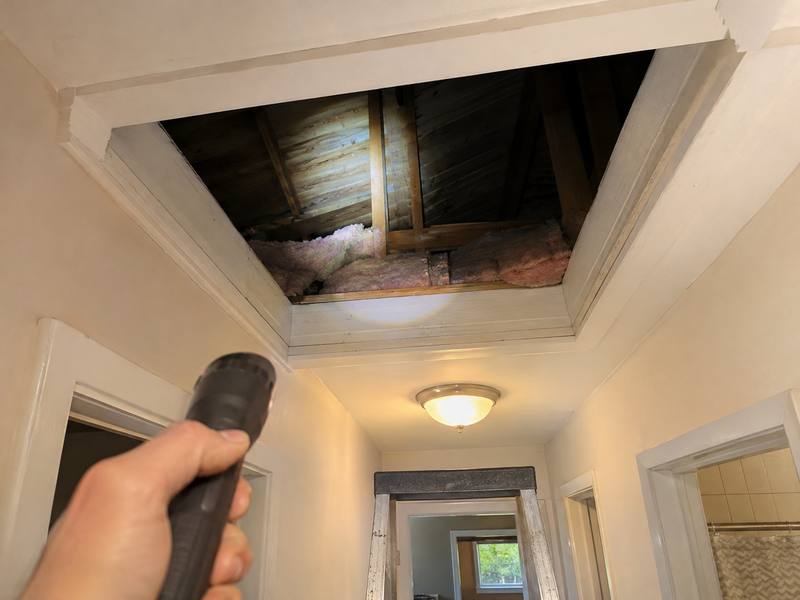
You can do a first check yourself. If your house has an attic hatch, take a flashlight and a tape measure up the ladder. Measure the insulation depth between the ceiling joists in a few spots, then look toward the eaves for light coming in from the soffit vents. Look, but don't dig into the old material. Write the numbers down and have them ready when we talk.
Sloped ceilings and rooms under the roof
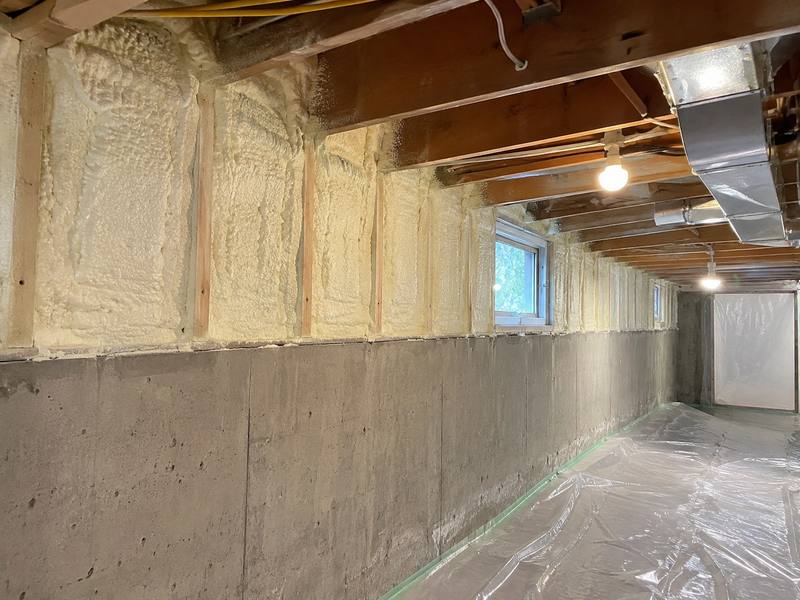
If your upstairs has sloped ceilings, those slopes can't take blown-in insulation. The cavity between the drywall and the roof deck is closed and narrow, so we have no way to blow loose fill in and check it for even depth. Slopes usually get spray foam instead. Our page on cathedral ceilings and knee walls explains where foam fits and why.
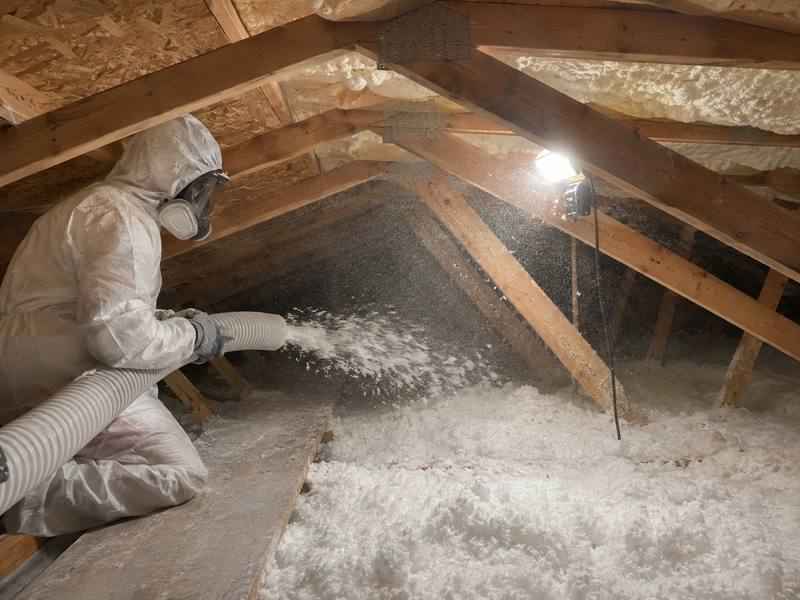
If there's a flat attic above the slopes, that part takes blown-in in our usual order: seal the top plates and every hole where wires, pipes and light boxes come up, fit baffles at the eaves, then blow insulation in to full depth.
Before we start blowing, we staple depth rulers to the ceiling joists across the attic. Once we've gone, those rulers are the easiest way to check our work. Shine your flashlight on them from the hatch.
Older attics: look before anything moves
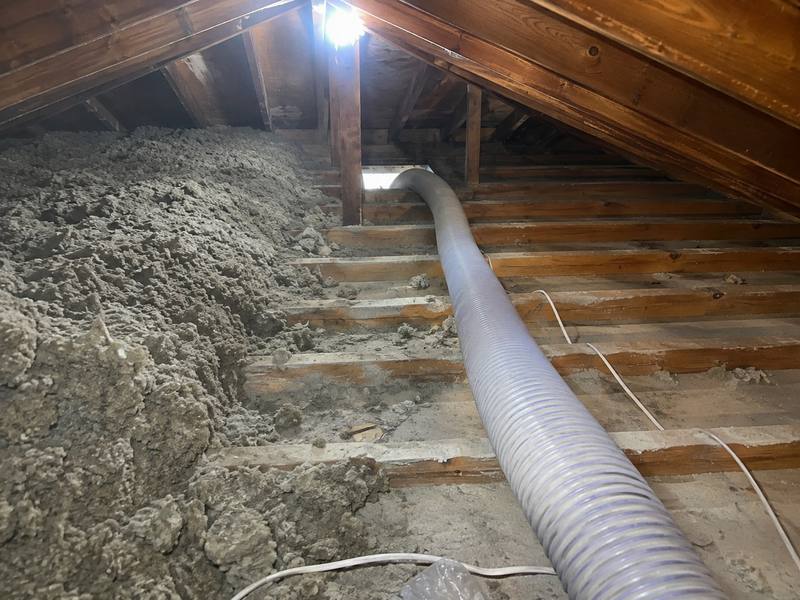
An older attic can hold layers from more than one upgrade, with newer material laid over whatever went in first. So before anyone moves anything, we look and note what each layer is and how deep it sits.
Air sealing goes first because blown fibreglass or cellulose slows heat but doesn't stop air. Warm air leaking up from the rooms brings moisture with it, and on a cold roof deck that moisture can turn to frost.
If we find something in an older layer we don't recognise, we say so and stop there rather than guess.
Close by: York Mills, Leaside and Bayview Village
Our crew also works in the neighbourhoods closest to Lawrence Park. Each has its own page: attic insulation in York Mills, blown-in work in Leaside and insulation in Bayview Village.
Everything else we do is on our home page: blown-in insulation, spray foam, taking out old attic insulation and help with rebates.
Local details for Lawrence Park
- Postal codes: M4N
- Distance: About 5 km away in a straight line
- Permit rules: toronto.ca
- Nearby: York Mills, Leaside, Bayview Village
About Lawrence Park: Lawrence Park, ON on Wikipedia · Lawrence Park on Google Maps
FAQ
Insulation questions from Lawrence Park
We stop work and leave it alone. Health Canada says it is prudent to assume vermiculite insulation produced before 1990 may contain some asbestos, so before anything in that attic gets moved we recommend that a qualified lab or abatement firm test it. Our vermiculite page explains what happens next.
The sloped ceilings can't. They usually get spray foam instead. If the house has a flat attic above the slopes, that part can take blown-in. So one house can end up with both.
No. Adding or replacing insulation is on the City's list of work that doesn't need a building permit. You still have to meet the Zoning Bylaw, and that's true whether the insulation goes in the attic or somewhere else in the house.
Services
Services in Lawrence Park, ON

Get a quote
Arrange an insulation visit in Lawrence Park
Call (437) 525-3774 or send the form. We'll look in your attic, tell you what it needs and give you a written estimate.