Attic Insulation Removal in North York, ON
We vacuum out old insulation that is wet or damaged by rodents, seal the bare ceiling, then blow new insulation in to full depth.
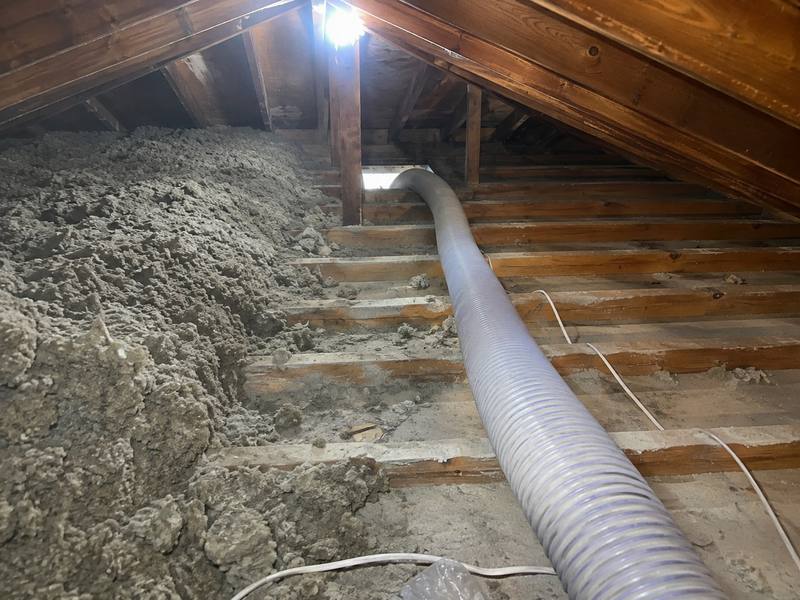
Attic insulation removal in North York is for attics where the old insulation is wet, soiled by animals or packed flat, and no longer worth keeping. We pull it out with an industrial vacuum and bag it. Then we seal the bare ceiling and blow new insulation in. If your old insulation is dry and clean, it can usually stay, and we will tell you that.
When old insulation has to come out
Old insulation has to come out when it is wet, soiled by animals, or has gone dark and flat over a leak. You can check most of this yourself from the hatch with a flashlight before anyone climbs in.
Each sign has a different cause. The cause decides what has to happen before our crew starts.
- Water stains and wet patches: brown rings on the fibreglass, or a damp, matted layer, mean a roof leak. Wet insulation stops insulating and holds moisture against the ceiling boards and top plates. The leak gets fixed first, by a roofer, then we take the wet material out.
- Droppings, nests and a urine smell: mice, squirrels and raccoons tunnel through loose fill and leave their waste in it. That is rodent-damaged insulation, and all of it comes out.
- Dark, flattened insulation: fibreglass that has gone grey or black and packed down in streaks has been filtering house air leaking up through the ceiling, or sitting under a drip. It is thinnest right where the heat gets out.
- Mould on the roof deck: if you see mould on the underside of the roof boards, that part is for a mould remediation specialist. We do not treat mould. When they are done, we take out the insulation and start the attic over.
When it can stay
Dry, clean insulation that is just thin can stay where it is. Removal adds work and cost, and there is no point pulling out material that still works. If that describes your attic, the estimate will say so.
Then our crew pulls the existing layer back at the top plates and around wiring and plumbing holes, seals those gaps, and lays it back down. Next, baffles go in at the eaves, and we add blown-in insulation over the top to full depth.
You can check this from your hatch. Insulation that is even, light in colour and dry is a good sign. Stains, a smell or droppings mean it comes out.
How removal works, start to finish
We remove insulation by vacuum. An industrial vacuum pulls the old insulation through a long hose straight into removal bags, so nobody carries loose material down your stairs. This is the order on the day, so you know what to expect.
Vacuum and bag
First, our crew lays drop sheets and floor protection from your front door to the hatch. Then the hose goes up through the hatch. The vacuum itself stays outside the living space, and the old insulation goes into removal bags as it comes out. Last, we sweep the attic floor down to the ceiling boards so nothing loose is left between the ceiling joists.
Seal the bare ceiling
A bare ceiling is the easiest time to air seal an attic properly. With the insulation gone you can see every top plate, wire hole, plumbing stack and light box. We seal each one, and the hatch too, so warm, damp house air stops leaking up into the attic.
Insulate again
Next, baffles go in at the eaves between the rafters. They keep the soffit vents open once the attic is full. We staple depth rulers to the ceiling joists where you can see them from the hatch. Last, we blow new insulation in to full depth. Afterwards you can check those rulers yourself with a flashlight.
Animals first, then insulation
If mice, squirrels or raccoons have been in your attic, a pest-control company deals with the animals before we start. They find how the animals got in and close it off. We do not do that part.
If we cleaned out the attic while animals could still get in, they would just move back into a clean attic. So once pest control is done, our crew vacuums out the droppings, nests and soiled insulation. Then we seal and insulate the attic the same way as any other removal.
If it looks like vermiculite
Vermiculite is pebbly and light, grey-brown or gold, and it pours like coarse gravel instead of lying in a mat. Health Canada advises that some vermiculite insulation may contain asbestos and that the best way to minimize the risk is to avoid disturbing it in any way. Health Canada also says it is prudent to assume vermiculite insulation produced before 1990 may contain some asbestos.
If our crew finds it, we stop and leave it alone. We recommend that a qualified lab or abatement firm test it before the job goes any further. Removing vermiculite is a job for a licensed abatement firm, not for us. Our page on vermiculite in a North York attic covers that step in more detail.
What a removal estimate should list
A removal estimate should list what is coming out, why, and what goes back in. If anything below is missing, ask about it before you sign.
- The area: which parts of the attic are included, and whether that covers the space over an addition or a garage.
- What is coming out and why: wet, rodent-damaged or flattened, with the reason for each part of the attic.
- How the vacuum hose gets in: which hatch it goes through, and its path through the house from the door.
- What happens to the full removal bags.
- The air sealing afterwards: which top plates and penetrations get sealed, and the hatch itself.
- What goes back in, and to what depth, with depth rulers you can read from the hatch.
Permits for insulation removal in North York
This job does not need a building permit. The City of Toronto lists adding or replacing insulation as work that does not need one, so the estimate only covers the work itself.
To book an attic inspection and a written estimate, call (437) 525-3774 or start from our home page.
More on Attic Insulation Removal
FAQ
Common questions about attic insulation removal
The cost to vacuum out old insulation depends on the size of the attic, what is coming out and how easy the hatch is to get to. We price each attic after we look at it. The estimate should also include the air sealing and the new insulation, because removal by itself just leaves you with a bare ceiling. Call us to book an attic inspection and a written estimate.
Removing old insulation is worth it when it is wet, stained by a roof leak, or full of droppings and nests. When the insulation is dry and clean but thin, it is not worth it. Damaged insulation holds moisture and odour, and new insulation laid on top ends up with the same problem. Clean insulation can stay and be topped up after the air sealing.
Attic insulation needs replacing when it is wet, water-stained, soiled by animals, or dark and flattened in patches. Check from the hatch with a flashlight. Look for brown rings, droppings, tunnels, and grey streaks over the top plates. If the insulation is thin but clean, it needs topping up, not replacing.
Spray foam can be removed from an attic, but it does not vacuum out like loose fill. Foam sticks to the roof deck and framing, so it has to be cut and scraped off by hand. Tell us what is up there and why it needs to come out, and we will walk you through what the job involves.

Get a quote
Book an attic insulation inspection in North York
Call (437) 525-3774 or send the form. We'll look in your attic, tell you what it needs and give you a written estimate.